A quick long note on how to get good information on public land (particularly in territory that is not tourist-friendly, like Idaho, Montana, and Wyoming, but there are similar places everywhere, just pick a National Forest). These are all stupid, and I’m sad I feel the need to write them down, but this is how things work.
Look the part (no new clothes, no big camera around your neck, no EV, even your license plates matter–don’t expect the welcome wagon if you roll into Idaho with California plates, any other plates really; mine are Wisconsin, and I spent a little time scrolling through eBay thinking about buying license plates from MT, WY, ID, and UT).
Do not ask “What’s the best ____?” Put in some effort (maybe with the help of my books). Hike a few trails. Say something like, “Hey, I hiked up to ____________ and loved it, what’s something similar?” Show effort and ability, and the info you get in return increases dramatically. Ask a generic question, receive a generic answer.
National Park Rangers aren’t allowed to provide opinions (who knows why???). So, do a little homework and frame your questions like, “I’m thinking about hiking _____, have you done it, is it a good hike? What are a few similar trails?” Or something like “I was at xyz earlier today, and it was cool but super busy. What’s something just as neat without the crowds?” All of this stuff is like high school all over again. There are tiers to everything, but information doesn’t have to be that way. I’m here to help, and there are quite a few people out there who believe public land is for everyone. Unfortunately, there are an awful lot of people who put a great deal of effort and money into controlling the flow of humans and information. And I’ve been surprised how many regular people are against other regular people learning about public land that’s not one of the few dozen endlessly repeated destinations. I don’t know. I guess, pick your side :). Our world is insanely divided right now.
Be friendly. Joke around. Smile. This is just a life thing. I’ve been a crab for the most part since starting a business, but I end up being quite happy while hiking around. I have no doubt that the information I get in return for sharing some of my own is better for it. (Side note: If you’re thinking about starting a similar business, feel free to reach out. I can probably spare you many headaches without being too discouraging.)
Be (at least a little) suspicious of information fed to you through social media, hiking apps, pretty much any way information flows (that includes me; I don’t pretend to know everything, and I’m 100% sure I’ve walked by all kinds of amazing “unknown” places).
Use your eyes! For something like the first 10 years of getting to know our country, I was laser-focused on National Parks (for obvious reasons — it was my business, and I felt the pressure to do the best job possible). So many times, I’d be craning my neck, thinking “that looks cool,” as I drove hours and hours from one park to the next. There are many non-National Park pieces of Public Land that are every bit as incredible as the best of the best National Parks (that receive 99.99% of the media attention).
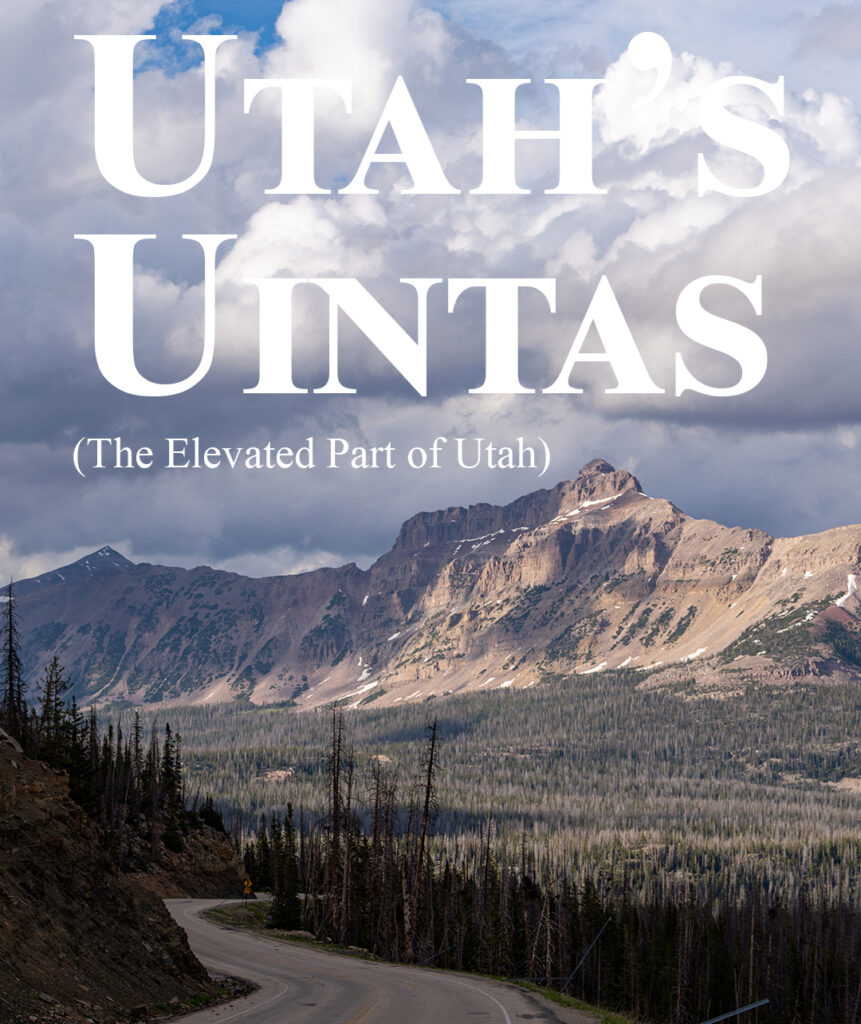
It can be nearly impossible to do in summer, but if you can make it work by dispersed camping or simply crossing your fingers and being willing to pay last-minute rates, traveling without a fixed itinerary can be extremely beneficial. Not only can you work around bad weather, smoke/fire, and construction, but if you find a place you love (maybe something like Inyo National Forest or Uinta National Forest), you can stick around. The most beautiful National Forests are usually more than 1 million acres with more than 1,000 miles of trails. The things I’m pointing out to you in this book are the very tip of the iceberg.
Pay attention to business names in gateway towns. Most people won’t tell you the good spots when you’re talking to them, but they are often right out there in the open. People are living in these places because of the land, and they like to brag about it. Go to Ridgway, Colorado, and you’ll see all kinds of businesses with the word “Sneffels” in them. It’s a common theme. Pay attention, and you might learn about something really special.
Also, pay attention to sites that are uncommonly confusing or off-putting. Like places where they use the same name for the same feature, or a site with multiple names. Creating confusion is always intentional, and in these instances, they’re trying to manage people from a more desirable place to a less desirable place. And then, you probably know the drill on this one. Death Valley. Mosquito Lakes. Bloodsucker Lake. Devil’s everything. Hell’s Canyon. Lost this. Dead that. While I do think they started to go the other way on this naming convention a little bit (too many people out West must’ve been on to it), for the most part, from my experiences, every site with a negative name is a positively amazing destination.
Pay attention to review seeding on hiking apps. Some of the best hikes I’ve found have been from finding someone on there who leaves nothing but 1-star reviews on all the hikes he’s trying to “protect.” There are many tactics here. I’ve seen amazing trails that people review-bomb with glowing 4-star reviews. The review is accurate. The rating is not. And then people ignore it because it’s a 4-star trail.
Pay attention to your surroundings. Some people are going to lose it here, but look off trail. There are a ton of social trails, and they’re usually there for a reason: there’s something awesome to see. The problem with social trails is that when word gets out, and the information isn’t clear, people guess where the “secret” is and make all kinds of false paths. This happens all over the place. At this point, the agency should make it an official trail and put up a sign, which, quite frankly, is what they should’ve done in the first place. But whatever. I can’t change human nature. Look up the park rules on off-trail travel. Many parks allow it as long as you stay on sturdy surfaces.
I guess the short suggestion here is to “pay attention.” 🙂
Google Maps is your friend. Use the map in terrain mode. Interesting elevation usually equals interesting destinations (and thigh-burning hikes :). Pay attention to what’s tree-covered and what’s not. Above the trees is where the views are. Be curious. We have all kinds of tools at our fingertips, allowing us to find things from the comfort of our couch without wasting valuable vacation time searching for that “hidden gem.”
With that said, there’s much joy to be felt in discovery. And flat tires, washboard roads, U-turns, dead ends, false paths, etc., etc. I’ve “wasted” a bunch of time checking out unknown areas, and I’ll keep doing it (within reason) because it’s pretty darn fun to find that unknown waterfall, swimming hole, or marmot :). Happy exploring!